RBI May Raise Interest Rates in October: What It Means for You
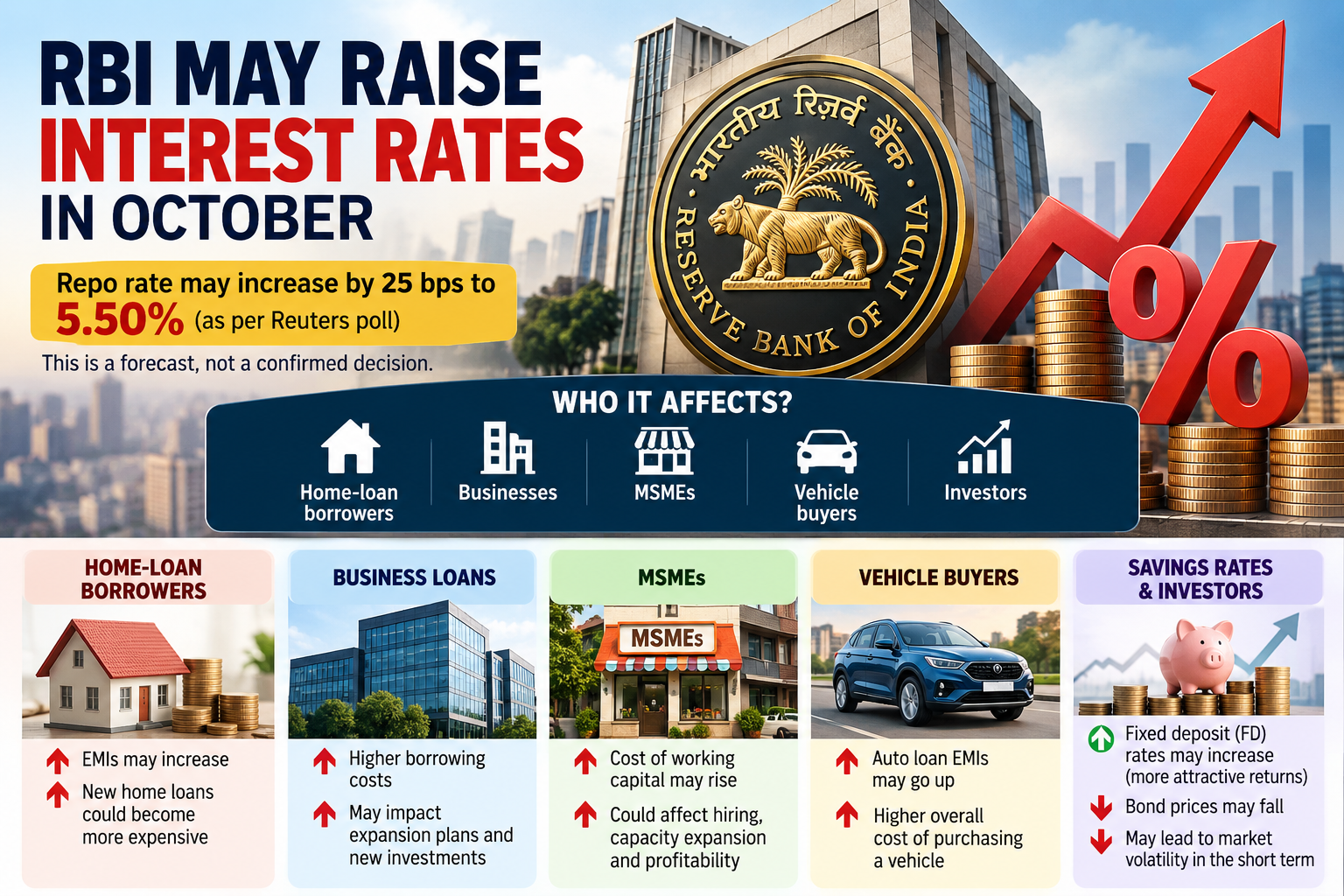
RBI May Raise Interest Rates in October: What Could It Mean for EMIs and Business Loans?
India’s interest-rate environment could be heading for another change. Economists surveyed by Reuters expect the Reserve Bank of India (RBI) may consider increasing the repo rate by 25 basis points to 5.50% at its October monetary policy meeting.
While this is only a forecast and not a confirmed RBI decision, an increase in the repo rate could affect borrowers, businesses, MSMEs, vehicle buyers, savers and investors across India.
Why Does the Repo Rate Matter?
The repo rate is the interest rate at which the RBI lends money to commercial banks. When the repo rate increases, borrowing becomes more expensive for banks, and some of that additional cost can eventually be passed on to customers.
This can influence interest rates on home loans, business loans, vehicle loans and other forms of credit.
What Could Change for Home-Loan Borrowers?
People with floating-rate home loans could see their borrowing costs increase if banks revise their lending rates.
Monthly EMIs could increase.
Banks may extend loan tenure in some cases.
New home loans could become more expensive.
Borrowers may need to review their monthly budgets.
Even a small change in interest rates can have a noticeable impact on a large, long-term home loan.
What Could It Mean for Businesses?
Higher interest rates can increase the cost of borrowing for businesses.
Companies that depend on loans for expansion, equipment, infrastructure or working capital may become more cautious about taking on additional debt.
For growing businesses, this could mean:
Higher financing costs
More expensive expansion plans
Greater focus on cash-flow management
Delayed investment decisions
MSMEs Could Feel the Impact
MSMEs often depend heavily on working-capital loans and other forms of short-term financing.
If borrowing costs rise, businesses may have to carefully manage inventory, operating expenses, hiring and expansion.
Companies with strong cash flow and lower debt levels may be better positioned to manage a higher-interest-rate environment.
Vehicle Loans May Become Costlier
Consumers planning to purchase cars or two-wheelers through financing could also be affected.
If lenders increase loan rates, buyers could face higher EMIs or a higher overall cost of financing their vehicle.
Good News for Savers?
Higher interest rates are not negative for everyone.
Banks may eventually offer more attractive rates on fixed deposits and other savings products. This could benefit people who prefer lower-risk savings and investment options.
What Should You Watch Next?
The key development will be the RBI’s official monetary policy decision.
Until then, borrowers and businesses should avoid treating forecasts as confirmed policy. Instead, they can use this period to review existing loans, understand their interest-rate structure and evaluate how higher borrowing costs could affect future financial decisions.
The Bigger Picture
Interest-rate changes affect much more than EMIs. They can influence consumer spending, business investment, savings behaviour, credit demand and overall economic activity.
For households, the focus may be on managing EMIs. For businesses and MSMEs, the bigger question could be how to balance growth plans with potentially higher financing costs.
The RBI has not yet confirmed this rate increase. The 5.50% figure represents an economist forecast and should not be treated as an announced policy decision.