AJ Academy Logo
AJ Academy
CoursesCareer LabFor Colleges
AboutContact
Skill Gap TestLoginRegister
HomeSkill Gap TestLoginRegister
Career LabCoursesFor Colleges
AboutContact
AJ Academy Logo

AJ Academy

Empowering careers through quality education and mentorship. Your journey to success starts here.

Quick Links

  • Home
  • Career Lab
  • For Colleges
  • About
  • Contact

Job-Ready Programs

  • Courses After MBA
  • Finance Analytics
  • Digital Marketing
  • Business Analytics
  • Advanced Excel
  • Power BI
  • MBA Placement Training
  • College Placement Partner
  • Data Analytics

Resources

  • Courses
  • Mentors
  • Jobs and Internships
  • Internships
  • Placement Training
  • College Training
  • Corporate Training
  • Workshops
  • Success Stories
  • Internship Policy
  • Placements
  • Projects
  • Gallery
  • Blog
  • College Partner Chennai
  • Value Added Courses
  • MoU Training Partner
  • Guide: Placement (Chennai)
  • Guide: Online skills
  • Guide: College partnerships
  • Login

Connect With Us

Legal

  • Placement Assistance Policy
  • Editorial Policy
  • Internship Policy
  • Privacy Policy
  • Terms & Conditions
  • Refund Policy
  • Contact Us

© 2026 AJ Academy. A brand operated by AchieversJournal Pvt Ltd. All rights reserved.

  • Home
  • Career Lab
  • Courses
  • Jobs & Internships
  • Profile
  1. Home
  2. /
  3. Blog
  4. /
  5. UPI Is Changing From October 15: What Businesses and Customers Need to Know
Business News | Digital Payments | Fintech & MSME

UPI Is Changing From October 15: What Businesses and Customers Need to Know

Published on 19 September 20261,000 views
AJ Academy blog image about UPI Is Changing From October 15: What Businesses and Customers Need to Know for career and skill development students

UPI Is Changing From October 15: What Businesses and Customers Need to Know

UPI has become one of the most important payment systems in India, used every day by consumers, retailers, MSMEs, and service businesses.

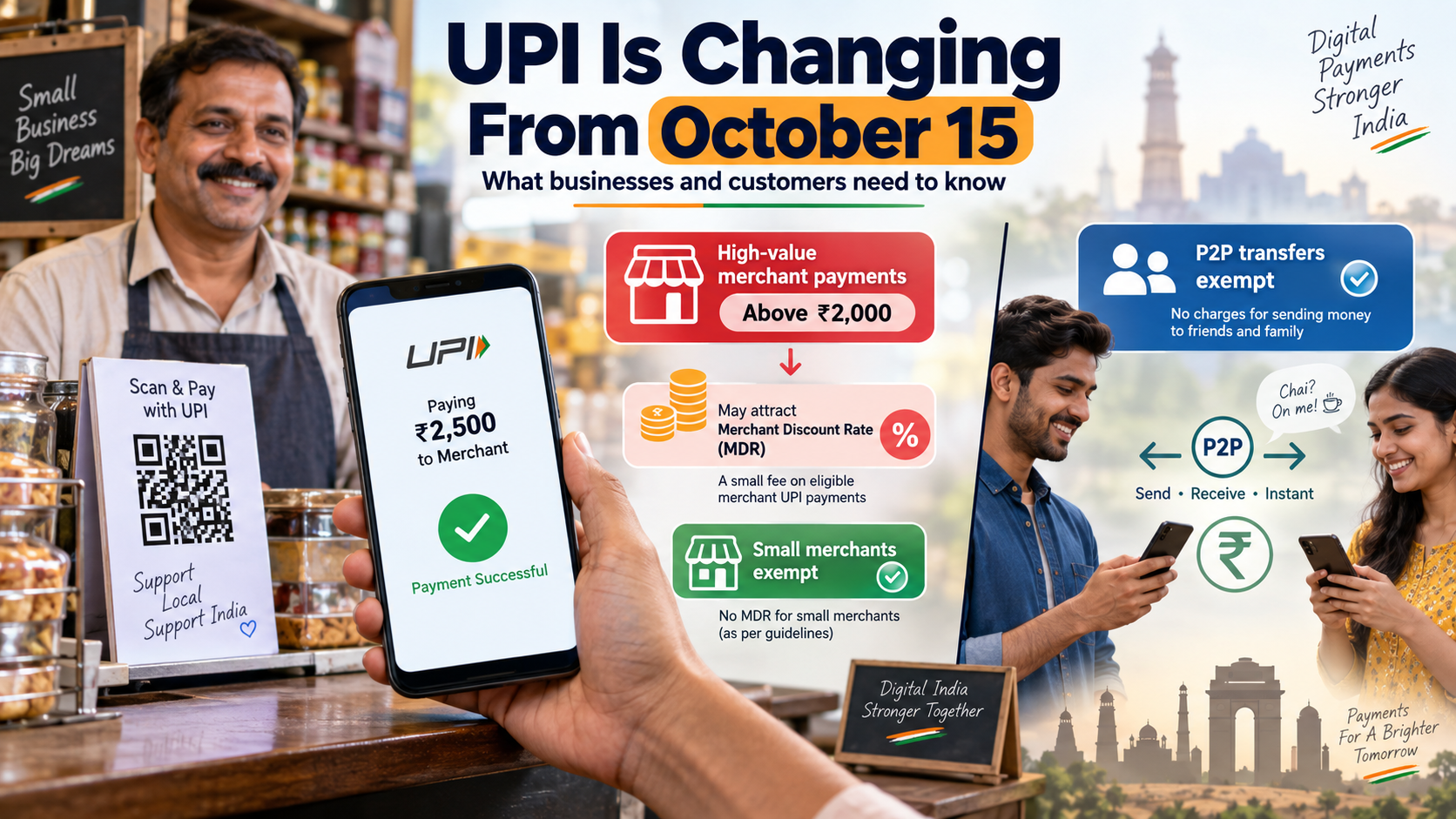
From October 15, 2026, certain high-value merchant UPI transactions above ₹2,000 will come under a new Merchant Discount Rate structure. Person-to-person transfers and qualifying small merchants remain exempt, while customers are not supposed to be directly charged the MDR.


What Changes? 

💳 High-Value Merchant Payments
Eligible merchant transactions above ₹2,000 may attract MDR, creating an additional cost for some businesses.


👥 P2P Transfers Stay Free
UPI transfers between individuals, such as sending money to friends or family, remain unaffected.


🏪 Small Merchants Are Protected
Eligible small merchants continue to receive exemption, reducing the impact on smaller local businesses.


👤 Customers Are Not Directly Charged
The MDR is a merchant-side payment cost and should not be directly added as a separate fee to customers.


🏦 Banks and Fintech Companies Could Gain
The new structure can create additional revenue for banks and payment companies that support UPI infrastructure.


Why Does This Matter for Businesses?

For larger retailers and businesses processing many high-value transactions, even a small percentage fee can add up.

Businesses may need to review:

  • Payment processing costs
  • Average transaction size
  • Profit margins
  • Preferred payment options
  • Customer payment behaviour

Could Customers Be Affected Indirectly?

Customers may not pay the MDR directly, but some businesses could eventually adjust pricing or encourage alternative payment methods if transaction costs become significant.

This makes the change important not just for merchants, but also for regular UPI users.


Why Is the Fee Being Introduced?

The payment ecosystem requires continuous investment in:

  • Cybersecurity
  • Fraud prevention
  • Payment infrastructure
  • Customer support
  • Network reliability
  • Technology upgrades

The MDR is intended to help support the long-term sustainability of digital payment infrastructure.


What Should MSMEs Do?

MSMEs should:

✅ Understand whether they qualify for exemption
✅ Check their average UPI transaction value
✅ Monitor monthly digital payment costs
✅ Compare available payment options
✅ Avoid passing charges directly to customers without checking the applicable rules


Key Takeaway

UPI is not becoming chargeable for every user.

The major change affects certain high-value merchant transactions, while P2P users and eligible small merchants remain protected.

For businesses, this is a good time to review payment costs and understand how the new structure could affect margins.

Related articles

  • India’s Trade Deficit Is Improving — So Why Is Rising Oil Still a Concern?

    India’s merchandise trade deficit narrowed in August, helped by lower gold imports and stronger exports. But crude-oil imports rose sharply, which can still put pressure on the rupee, inflation, and business costs. The key issue is whether export growth can offset India’s higher energy bill.

  • India’s New Freight Highway Is Complete: What It Could Mean for Travel and Business

    India has completed more than 2,800 km of Dedicated Freight Corridor, separating a large share of freight movement from conventional passenger routes. The corridors are designed to move goods faster, improve logistics efficiency, and free capacity on existing railway lines. For businesses and passengers, that could mea

  • The Rupee Is Weakening: How It Can Affect Fuel, Gadgets and Travel Costs

    A weaker rupee can make imported goods and services more expensive for Indian consumers. Fuel, electronics, overseas travel and some business inputs can feel the impact first. Even people who never buy dollars directly can still experience the effects through higher prices.

  • Hosur’s EV Manufacturing Boom: What It Could Mean for Jobs, Suppliers and Startups

    Hosur is strengthening its position as a major EV manufacturing hub in Tamil Nadu. New investments could create opportunities across manufacturing, batteries, electronics, software and supply chains. For job seekers, MSMEs and startups, the EV ecosystem could open several new growth paths.

Browse all AJ Academy blog articles