India’s Trade Deficit Is Improving — So Why Is Rising Oil Still a Concern?
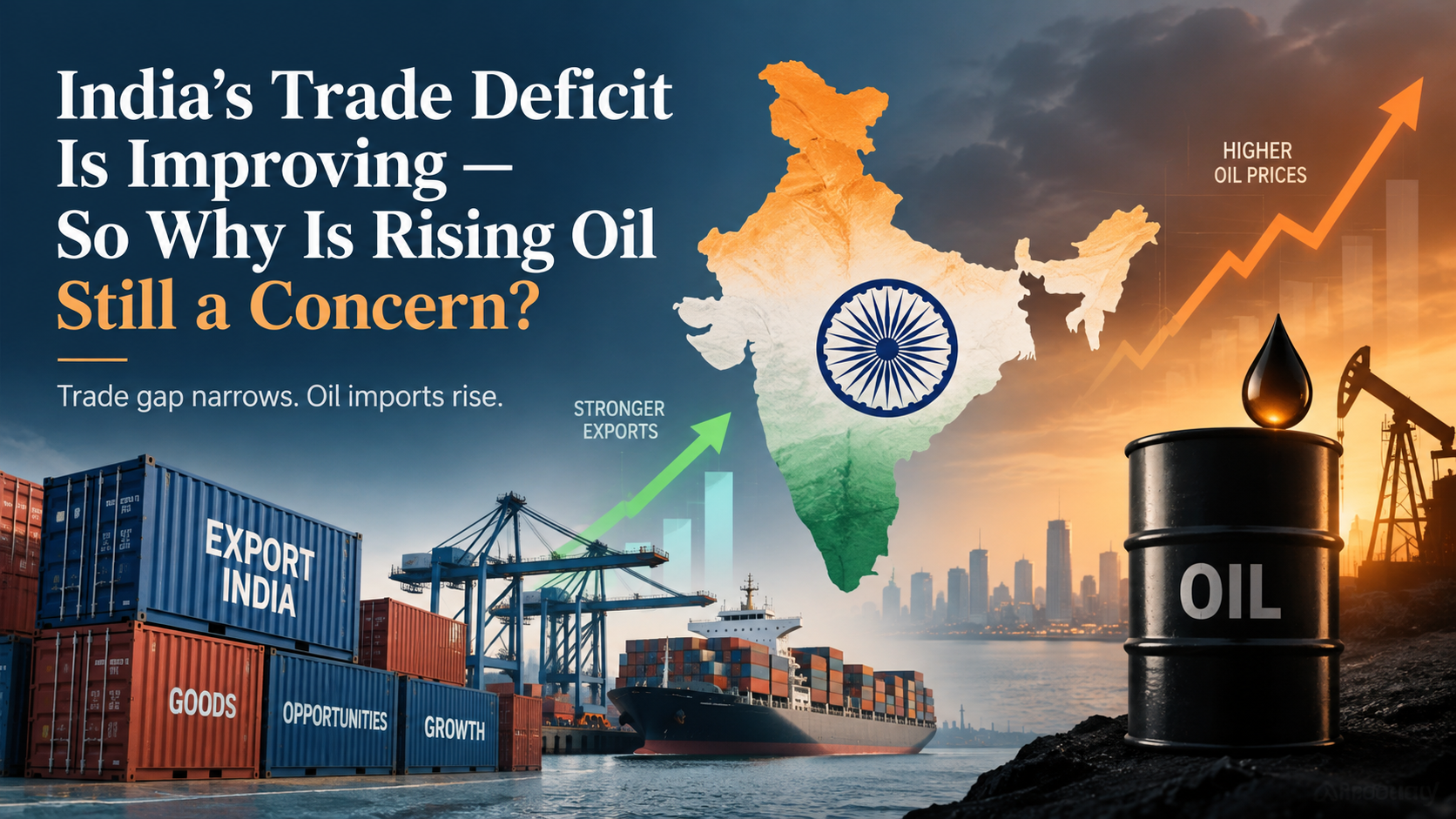
India’s Trade Deficit Is Improving — So Why Is Rising Oil Still a Concern?
India’s merchandise trade deficit narrowed to $26.86 billion in August, supported by lower gold imports and continued export strength in sectors such as engineering, electronics, and automobiles.
That is a positive sign because a smaller trade deficit means India is spending less on imports relative to what it earns from exports.
However, there is one major concern:
Crude-oil imports are still rising.
India imports a large share of its energy needs, so a higher oil bill can affect much more than just fuel prices.
Why This Matters
📦 Exports Are Helping
Strong exports in engineering goods, electronics, and automobiles are helping India earn more foreign exchange and support trade performance.
🪙 Lower Gold Imports Reduced Pressure
A fall in gold imports helped narrow the overall deficit and reduce some pressure on foreign exchange demand.
🛢️ Oil Imports Remain a Risk
Crude-oil imports increased sharply. Since oil is usually paid for in dollars, a higher oil bill can increase India’s demand for foreign currency.
💱 Rupee Pressure
If demand for dollars rises, the rupee can come under pressure. A weaker rupee can make imported goods, machinery, electronics, and overseas expenses more expensive.
📈 Inflation Can Increase
Higher energy costs affect transportation, logistics, manufacturing, and distribution. These costs can eventually move through the supply chain and affect consumer prices.
🏭 Businesses May Face Higher Costs
Manufacturers, MSMEs, transport companies, airlines, logistics firms, and businesses using imported raw materials can see operating costs rise.
🚚 Logistics Costs Matter
Fuel is a major expense in the movement of goods. Higher fuel costs can increase delivery, warehousing, and transportation expenses.
👨👩👧 Consumers Can Feel the Impact
Even if petrol or diesel prices do not move immediately, higher business and transport costs can still influence the prices of everyday products and services.
What Should Businesses Watch?
Businesses should keep an eye on:
- Crude-oil prices
- Rupee–dollar movement
- Import costs
- Freight and logistics expenses
- Export demand
- Raw-material prices
Key Takeaway
A narrowing trade deficit is good news for the Indian economy.
But rising oil imports remain an important challenge because they can affect the rupee, inflation, business costs, and household expenses.
India’s long-term strength will depend on two things:
Growing exports
and
Reducing dependence on expensive energy imports.